TEMPERA PAINT - History, Chemistry, Technique, and Legacy
Few artistic media have endured as long or shaped as much of human visual culture as tempera paint. For thousands of years it was the dominant painting medium in the Western world, the vehicle for Byzantine icons, Sienese altarpieces, and the glowing panels of the Early Renaissance. Yet today the word "tempera" is more likely to conjure images of cheap school poster paint. This article sets the record straight.
What is Tempera Paint?
The word "tempera" derives from the Latin temperare, to mix, blend, or bring to the proper consistency. To "temper" a paint was to combine dry pigment with a liquid binder. The term entered art-historical vocabulary primarily through Cennino Cennini's late 14th-century handbook Il Libro dell'Arte, which remains the most important primary source for understanding medieval and early Renaissance painting technique.
In modern use, "tempera" denotes water-based paints using an emulsifying binder, as opposed to oil paint (which uses drying oils like linseed) or fresco (where pigment bonds chemically to fresh lime plaster). The dominant and historically most significant form is egg tempera, which uses hen's egg yolk as its binder. The broader family also includes glue or size tempera (distemper), casein tempera (from milk protein), and gum tempera (using plant gums like gum arabic).
Confusingly, the 20th century introduced synthetic polymer "school tempera" or "poster paint" marketed under the tempera name but chemically unrelated to the historical medium. This has led many people to associate "tempera" with low-quality, impermanent paint, the precise opposite of its true historical character.
The Chemistry of Egg Tempera
Egg tempera consists of three components: dry pigment, egg yolk, and a small quantity of water. Understanding the chemistry explains why the medium produces its remarkable optical properties and extraordinary longevity.
The Binder
Hen's egg yolk is a complex biochemical substance: approximately 50% water, 30–35% lipids, and 15–17% proteins. The key to its performance as a paint binder is lecithin, a powerful natural emulsifier. Lecithin has both water-loving and fat-loving ends, allowing it to bridge the incompatible phases of water and oil, creating a stable oil-in-water emulsion in which microscopic oil droplets are suspended within the water phase.
This emulsion structure has critical consequences for painting. The paint is water-soluble while fresh, making it easy to apply and clean. As water evaporates, the lipid components undergo oxidative polymerisation, cross-linking into a hard, insoluble, glassy film. The proteins simultaneously denature and coagulate, adding further mechanical strength. The result, once fully cured, is one of the most durable paint films in existence.
Optical Properties
Egg tempera's characteristic luminosity, the inner glow that collectors and historians have long remarked upon, arises from its relatively low refractive index (approximately 1.47–1.50), close to that of many light pigments. This allows much incident light to pass through the paint layer, scatter within it, and return to the eye without being absorbed by the medium. The result is lighter, more stable colour than oil paint, which tends toward deeper saturation but yellows and darkens with age.
Because tempera dries too rapidly to blend wet-on-wet, painters must build tonal gradations through hatching, networks of fine parallel strokes. Under magnification, a tempera painting reveals this characteristic woven microstructure that contributes to its shimmering, textile-like quality.
Ageing
Fresh egg tempera dries within minutes from water evaporation, but the underlying lipid polymerisation continues for months or years. The paint film gradually becomes harder and more brittle, eventually almost glass-like. This long-term hardening is beneficial for preservation but makes aged tempera extremely difficult to remove, a property with significant conservation implications.
Types of Tempera
Distemper (Size/Glue Tempera)
Distemper uses animal skin glue, rabbit-skin glue, hide glue, or fish glue, as its binder. It is one of the oldest painting media in human history, producing a flat, chalky, matte film. More re-soluble than egg tempera after drying, it is less durable but extremely cheap and quick to prepare, making it historically popular for theatrical scenery, wall decoration, and ground preparation. Its vivid wet colours change little on drying, useful for large-scale decorative work assessed at a distance.
Casein Tempera
Casein is the principal protein of milk, precipitated by acidification and mixed with an alkali (typically slaked lime or borax) to form a powerful binder. Casein tempera dries to an exceptionally hard, water-resistant film, harder than distemper, more penetrating than egg tempera, and particularly suited to mural applications on plaster, wood, and stone. It was widely used in Northern European mural painting and, in the 20th century, by commercial illustrators before acrylics took over.
Gum Tempera
Gum arabic, the dried exudate of Acacia senegal, has been used as a binder since ancient Egypt and is most familiar today as the binder of watercolour. As a tempera binder it produces a brittle, somewhat glossy, water-soluble film, ideal for manuscript illumination and miniature painting, where its re-solubility allows delicate reworking, but less durable than egg tempera for larger works.
Compound Emulsions
Many historical recipes combine elements of several binders, egg with oil, egg with varnish, casein with oil. These "compound emulsions" sought specific working properties unavailable from a single binder. The addition of small quantities of linseed oil to egg yolk increases flexibility and slow-drying character, approaching oil paint's handling while retaining tempera's optical qualities. Such mixed media are frequently found in technical analysis of late medieval and early Renaissance paintings, reflecting the transition from tempera to oil as a gradual evolution rather than a sudden shift.
Note on "school tempera": Modern poster paints sold as "tempera" use synthetic acrylic or PVA binders mixed with chalk fillers. They are not archival, not historically related to egg tempera, and are intended purely for educational use.
Historical Context
The earliest cave paintings used water and animal fat to carry pigment — a rudimentary principle from which all tempera descended. By the Bronze Age, artists across the Near East and Mediterranean had access to animal glues, honey, beeswax, plant gums, and egg as binders.
Ancient Egypt
Ancient Egypt provides the richest early evidence for tempera-like paints. Egyptian painters primarily used glue tempera, animal skin glue or gum arabic, across more than three thousand years of tomb and temple painting. Their palette included Egyptian blue (the world's first synthetic pigment, a copper silicate produced from around 3000 BCE), malachite, azurite, ochres, haematite, orpiment, realgar, carbon black, and lime white.
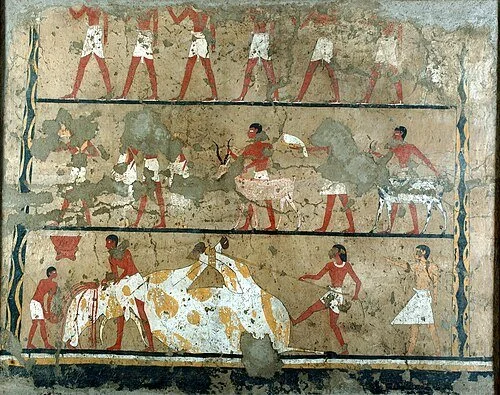
Ancient Egyptian wall painting with tempera on intonaco made with clay and straw, representing offering bearers and a sacrifice scene. From the Tomb of Iti and Neferu, Gebelein, between 2118 and 1980 BC (First Intermediate Period of Egypt). Museo Egizio, Turin (S. 14354/12).
The painted wooden coffins of the Middle and New Kingdom periods (c. 2055–1070 BCE) survive in extraordinary condition, demonstrating the long-term stability of well-made Egyptian tempera. The Fayum mummy portraits of the Roman period (1st–4th century CE), many of which are painted in tempera on thin wooden panels, represent a unique convergence of Egyptian funerary tradition with Hellenistic portrait conventions, and are among the best-preserved paintings from antiquity.
Greece and Rome
Although virtually no ancient Greek easel paintings survive, we know from Pliny the Elder and other literary sources that Greek painters were considered the greatest in the ancient world. Archaeological analysis of polychrome on Greek sculpture and architecture confirms the use of glue-based tempera for pigments including Egyptian blue, azurite, ochres, and lead white. In Roman Pompeii and Herculaneum, wall painting combined fresco with dry (secco) overpainting in tempera to achieve the full range of colour and detail required by wealthy patrons.
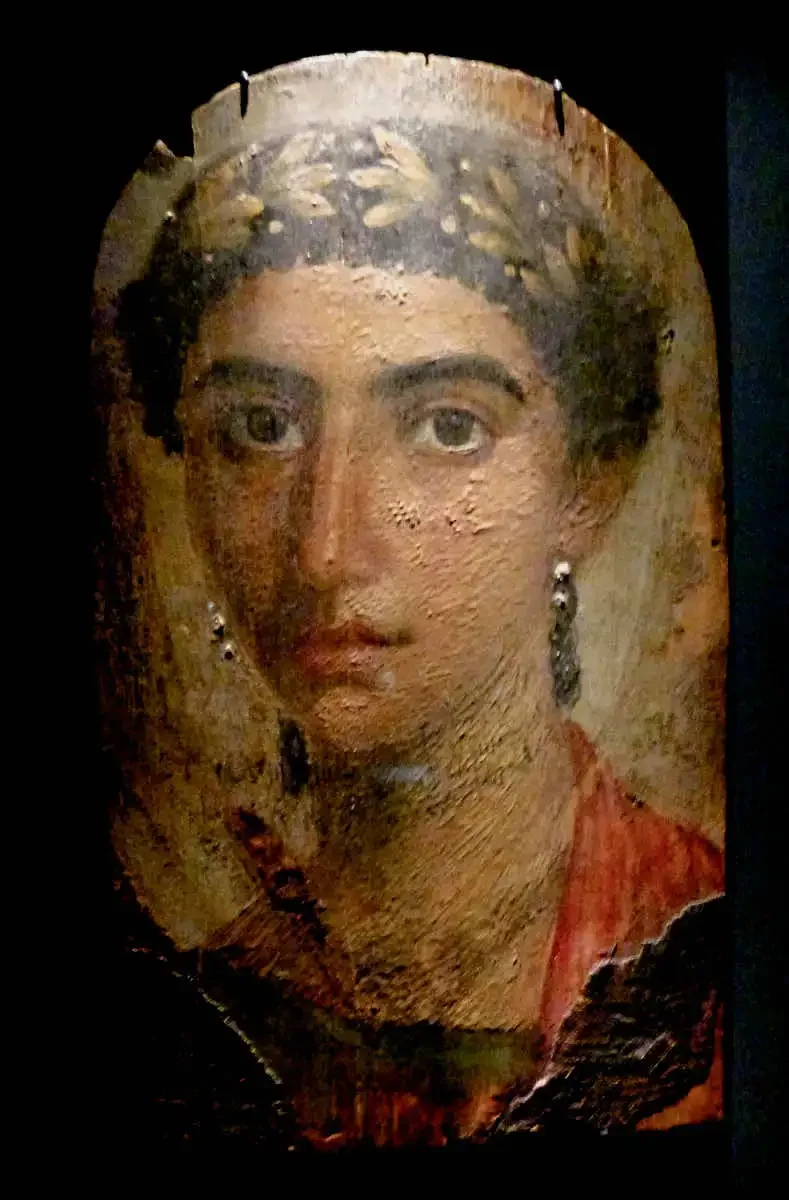
Mummy portrait of Eirene, Roman, c. 40/50 AD
Byzantine and Medieval Painting
The Byzantine Empire developed a painting tradition of extraordinary depth centred on the icon, a painted image of Christ, the Virgin, or a saint used as a focus for liturgical devotion. Byzantine icon painting became the primary vehicle through which egg tempera was transmitted to medieval Europe, and its techniques have survived, in recognisable form, to the present day.
Byzantine painters worked on wooden panels sized with glue, then covered with a white ground of chalk or gypsum (levkas) mixed with animal glue. Gold leaf was applied to the background, representing divine light, on an adhesive clay called bole. Figure painting was executed in egg tempera, beginning with a dark green or brown underpainting (the sankir), over which lighter flesh tones and highlights were built up in a systematic sequence codified and transmitted across generations.
Icons were not regarded merely as illustrations. In Orthodox theology they are understood as windows into the divine world, sacramental objects through which the faithful enter into communion with holy figures. This invested the act of painting with spiritual meaning: painters were expected to fast and pray while working, and the materials themselves, gold, precious pigments, egg, were understood as offerings. This theological context explains both the extraordinary technical care of Byzantine icons and the conservatism of the tradition: techniques were preserved as sacred inheritance.
Major collections of Byzantine icons survive at the Monastery of Saint Catherine on Mount Sinai (containing some of the earliest, including 5th–6th-century encaustic examples), the Byzantine and Christian Museum in Athens, and the Tretyakov Gallery in Moscow.
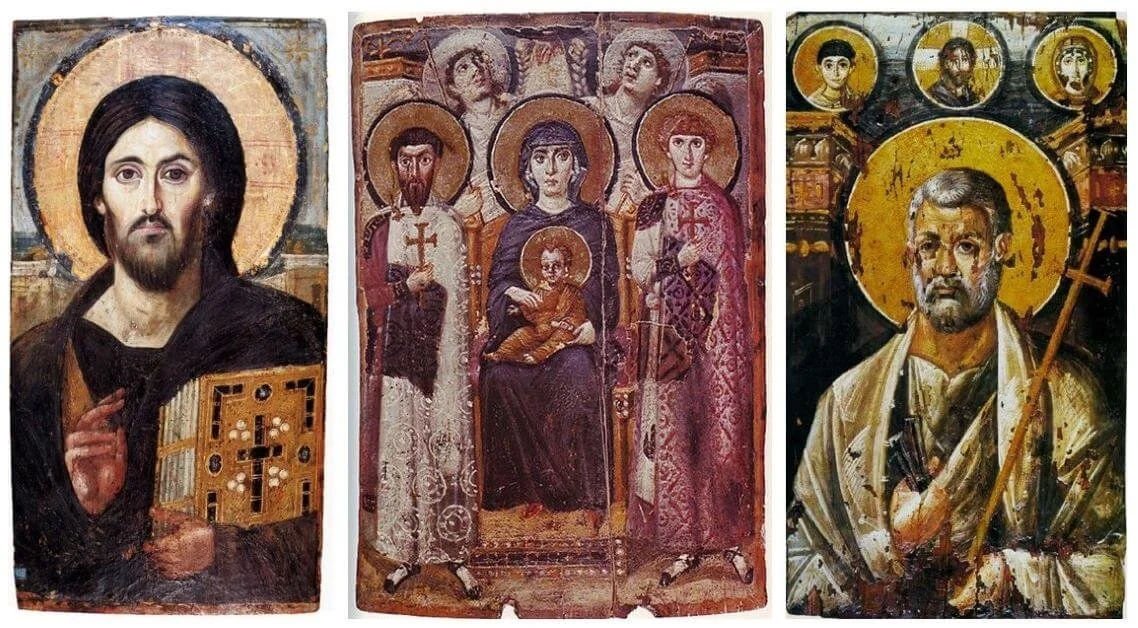
Icons at the Monastery of Saint Catherine, Mount Sinai, Egypt. Image from Sapientia.
In Italy, the 13th century saw the emergence of a distinctive Italian variant of the Byzantine tradition, exemplified by Cimabue in Florence and Duccio di Buoninsegna in Siena, which maintained Byzantine technical foundations while introducing a new naturalism that would flower in the Renaissance.
The Italian Renaissance: Tempera's Golden Age
The 14th and 15th centuries in Italy represent the high point of egg tempera as an artistic medium. The great altarpieces and devotional panels produced in Florence, Siena, Venice, and other centres by artists including Simone Martini, Fra Angelico, Filippo Lippi, Botticelli, Ghirlandaio, and the young Leonardo and Raphael are among the finest tempera paintings ever made.
Preparing a tempera panel was a substantial undertaking. The wood, typically poplar in Tuscany, was seasoned, sized with animal glue, reinforced with canvas, and covered with eight to twelve or more layers of gesso (chalk and glue), sanded between each coat until the surface achieved the smooth, ivory-like finish necessary for fine work. Gold grounds were applied over red bole. The composition was drawn in charcoal and brush, then painted working from darks to lights in the standard underpaint-and-overpaint sequence.
The technical demands of tempera shaped the character of Renaissance painting in profound ways. The necessity of hatching, building tonal gradations through networks of fine parallel strokes, demanded absolute planning and confidence. Corrections are difficult and visible. But this constraint also produced the characteristic shimmering, woven surfaces of Sienese and Florentine panels that no other technique can replicate.
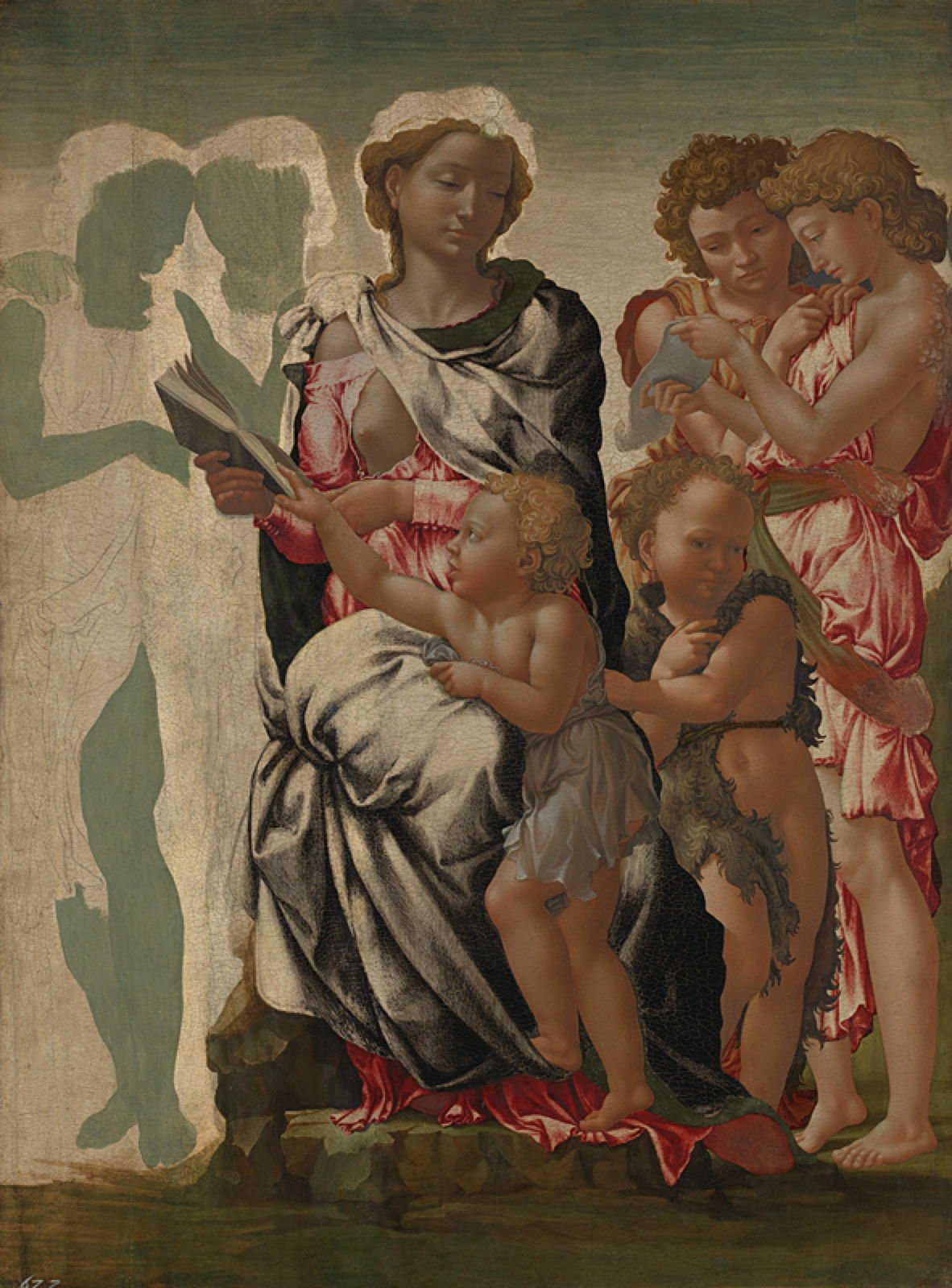
Michelangelo (1475-1564), The Virgin and Child with Saint John and Angels (‘The Manchester Madonna’) (c 1497), tempera on wood, 104.5 x 77 cm, The National Gallery (Bought, 1870), London. Courtesy of and © The National Gallery, London.
Cennino Cennini's Il Libro dell'Arte (c. 1390) is the pre-eminent primary source for Renaissance tempera technique. Trained in the workshop tradition descending from Giotto through three generations, Cennini's practical instructions for panel preparation, pigments, and painting sequences remain essential reading.
Decline and the Rise of Oil Paint
The displacement of egg tempera by oil paint as the dominant European painting medium was one of the most consequential technical transitions in art history. It happened gradually across the 15th century, earlier in Northern Europe, later in Italy, driven by artistic ambitions rather than any single inventor's discovery.
The principal advantages of oil over tempera were threefold: its slow drying allowed wet-on-wet blending and smooth tonal gradations; its higher refractive index enabled deeper, more saturated transparent glazes; and it could be applied in both thin glazes and thick impasto, giving painters a wider range of tactile effects. These advantages were decisive for the naturalistic ambitions of Renaissance painters seeking to depict three-dimensional space, fabric texture, and the play of light across skin with unprecedented fidelity.
In Flanders, Jan van Eyck and his contemporaries in the early 15th century pioneered a mixed technique of carefully prepared tempera underpaintings with oil-based glazes over the final layers, combining the covering power and rapid drying of tempera with the optical richness of oil. Technical analysis of Flemish panels confirms this complex multi-layer structure. The transition in Italy was similarly gradual: many Italian painters of the late 15th century, including Leonardo, used tempera for underpaintings and oil or mixed media for final layers.
By the mid-16th century, oil had largely superseded tempera for easel painting throughout Europe. Tempera survived in specialist contexts, glue distemper for theatrical scenery, casein for mural decoration, and most significantly, the continuous living tradition of Orthodox icon painting, which maintained egg tempera technique in essentially unchanged form across the centuries. This survival would prove invaluable when Western artists sought to revive the medium in the 19th and 20th centuries.
20th-Century Use
The most celebrated tempera revival in 20th-century Western art occurred in the United States, where a group of painters working largely outside the avant-garde mainstream rediscovered egg tempera as a vehicle for a distinctly American artistic vision.
The central figure is Andrew Wyeth (1917–2009), who began working in egg tempera in the late 1930s and made it the primary medium of his mature career. Wyeth prepared his own grounds on gessoed panels, made his own paint from raw pigments and fresh egg yolk, and worked with extreme deliberateness, sometimes spending months on a single painting. His egg tempera works, among them Christina's World (1948, MoMA), Winter Fields (1942), and the Helga series (1971–85), are characterised by a pale, cool luminosity perfectly matched to the northeastern American landscape. The chalky, slightly reticent quality of egg tempera, so unlike the saturated depths of oil, captures the bleached winter light of Pennsylvania and Maine in a way no other medium could.
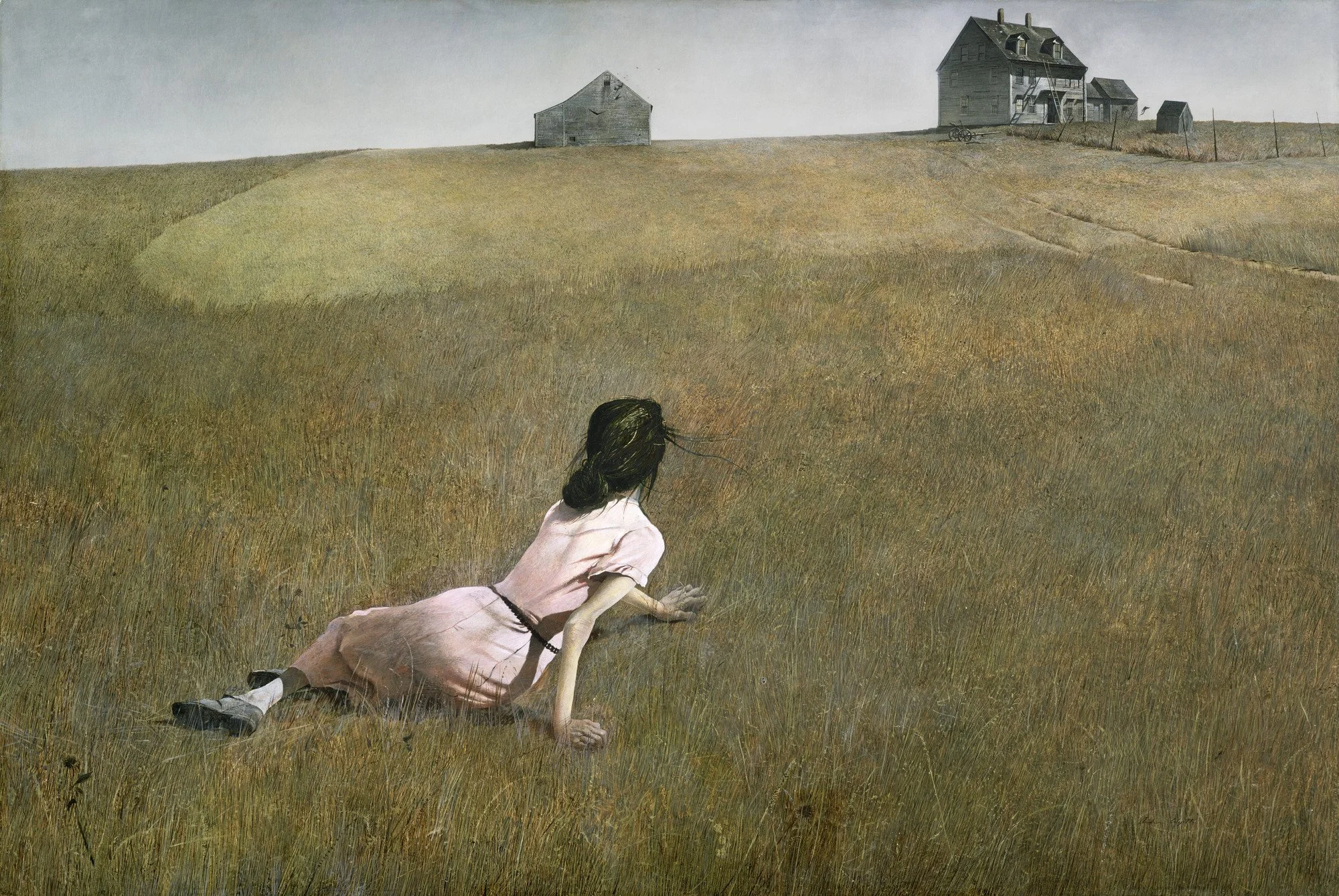
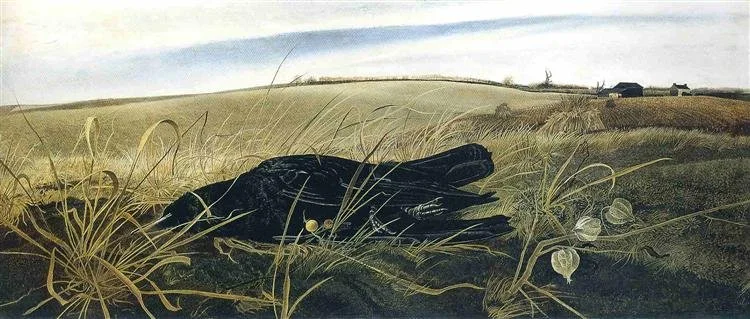
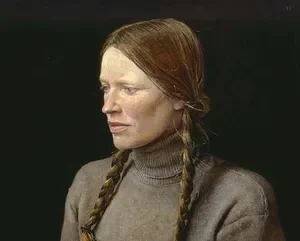
Before Wyeth, Thomas Hart Benton used tempera extensively for Regionalist figure compositions in the 1930s. In Britain, the Society of Painters in Tempera (founded 1901) organised exhibitions and published technical guides, counting Maxwell Armfield and Joseph Southall among its members. Daniel V. Thompson's The Practice of Tempera Painting (1936), combining rigorous historical scholarship with practical experience, remains the clearest guide to egg tempera technique ever written.
Tempera in Conservation
Conservation scientists have a uniquely intimate relationship with tempera paint. From a conservation perspective, egg tempera has several favourable properties: its dried film does not yellow with age as linseed oil does; it is hard and resistant to abrasion once cured; and its relative chemical simplicity makes its ageing behaviour more predictable than that of oil paint.
Panel Instability
The most widespread conservation problem affecting egg tempera panels is the instability of the wooden support. Wood is hygroscopic, it absorbs and releases moisture as humidity changes, swelling and contracting across the grain. A typical poplar altarpiece panel may change dimensionally by 1–2% of its width across normal seasonal humidity cycles. The gesso and paint bonded to the surface cannot accommodate this movement without cracking, cupping (where paint lifts at crack edges), and eventually flaking away. Earlier conservators reinforced panels with elaborate wood-strip cradles to restrain movement; modern practice instead focuses on providing stable environmental conditions to minimise wood movement in the first place.
Cleaning
Egg tempera is soluble in water and dilute aqueous solutions, but resistant to the organic solvents (white spirit, acetone, ethanol) used to clean oil paintings. This means that discoloured varnishes can often be removed with organic solvents without touching the underlying tempera, but that water-containing agents must be used with great care, since they can re-emulsify and remove original paint if they penetrate cracks.
Inpainting and Retouching
Where original paint has been lost, conservators fill and inpaint losses using the principle of tratteggio, fine hatched parallel strokes in pure colours that, from normal gallery distance, read as coherent fills but are clearly distinguishable from the original under close examination. This approach, developed at the Istituto Centrale del Restauro in Rome under Cesare Brandi in the mid-20th century, reflects a philosophical commitment to intellectual honesty: retouching does not pretend to be original paint, but does not announce itself at normal viewing distance.
Scientific Analysis
Technical examination of tempera paintings uses a suite of methods: infrared reflectography to reveal carbon-based underdrawings; X-radiography to image dense lead-containing pigments; cross-section analysis (microscopic paint samples embedded in resin and examined under SEM-EDX) to identify pigments and layer sequences; and gas chromatography-mass spectrometry (GC-MS) to identify organic binders. GC-MS analysis of early Italian panels has confirmed the predominance of egg yolk as binder while also revealing mixed media in individual works, providing direct chemical evidence for the complex transitional techniques of the 14th and 15th centuries.
Practical Technique
Preparing the Medium
To make egg tempera, the yolk is separated from the white, rolled gently between the fingers to dry the membrane, then pierced over a container while the membrane is discarded. The yolk is mixed with roughly half its volume of water and, if desired, a few drops of vinegar or dilute fungicide as a preservative. Dry pigments are ground on a glass slab with a glass muller, then combined with the yolk medium to the consistency of cream. The paint is best made fresh, it will keep a few days in a sealed container in a refrigerator, but deteriorates quickly at room temperature.
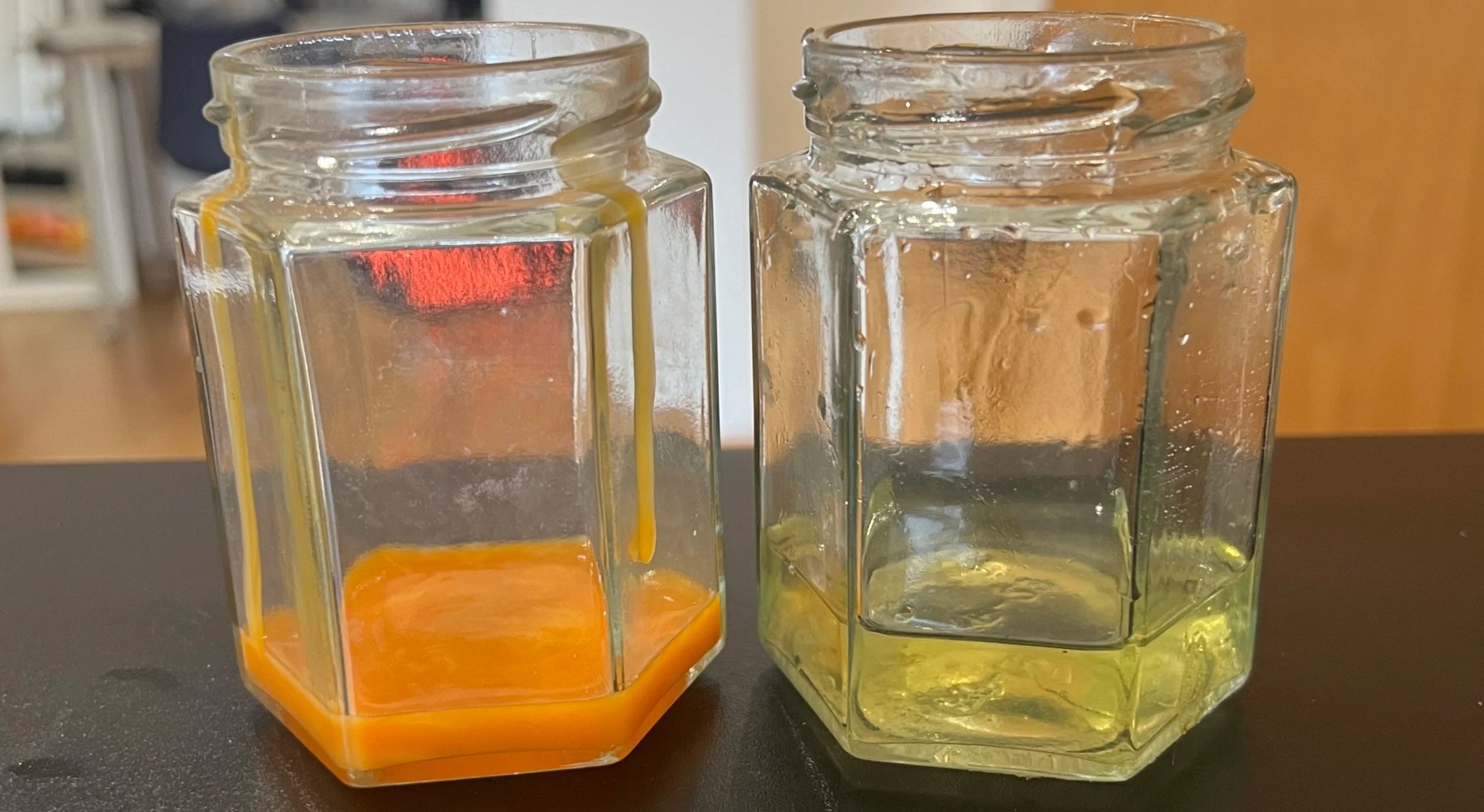
Egg yolk (and membrane) separated from egg white.
Working Method
The fundamental difference from oil painting is that tempera cannot be blended wet-on-wet. It dries within minutes of application, so all tonal and colour transitions must be achieved through optical blending, the visual impression of smooth gradients created by placing carefully judged strokes close together. Hatching and cross-hatching build up tonal form. Layering, transparent glazes over opaque underpaintings, or lighter opaques over darker grounds, creates optical depth. The flesh-painting sequence described by Cennini (dark green underpainting for shadows, progressively warmer flesh tones, near-white highlights applied last) exploits both principles.
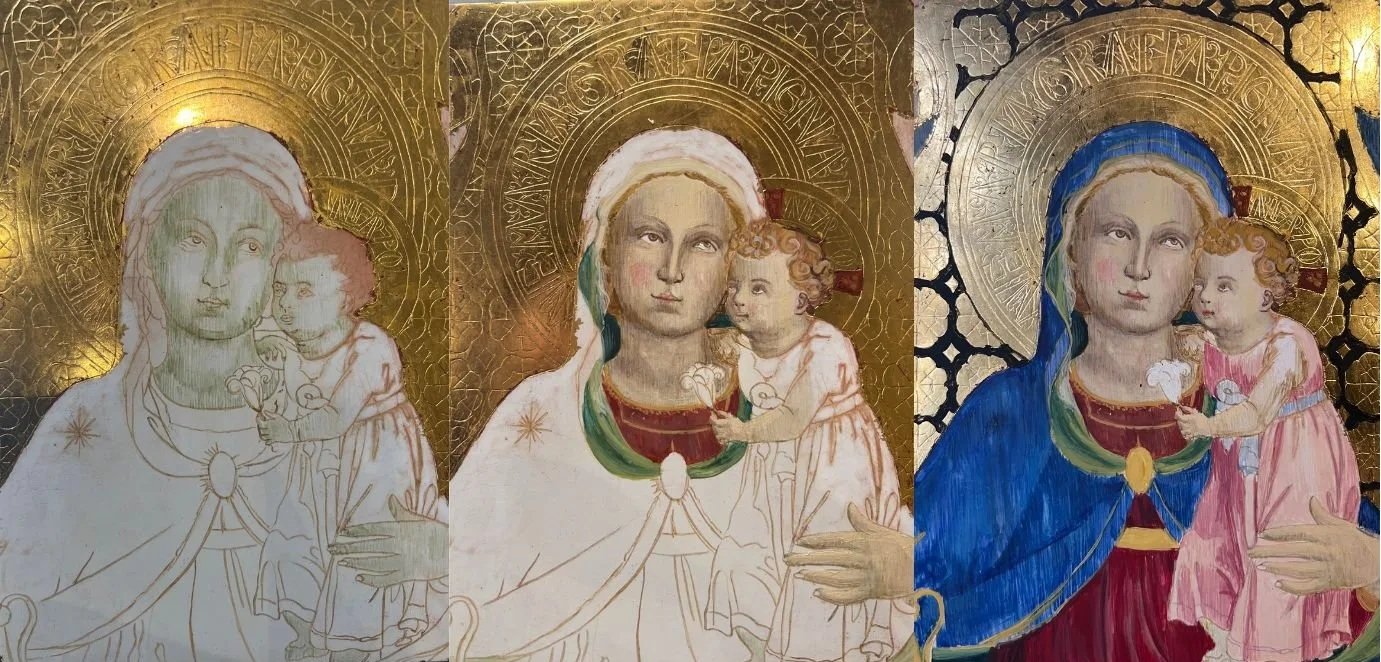
Rhiannon Piper’s recreation of Madonna of Humility (1433–1435) by Italian painter Fra Angelico.
Supports and Grounds
The ideal support is rigid, traditionally wood panel (poplar in Italy, oak in Northern Europe), in modern practice often hardboard or aluminium composite. Canvas can be used but presents structural problems, as egg tempera's inflexible film cracks when the fabric flexes. The ground is gesso, chalk and animal glue applied in multiple coats over a sized surface, sanded between each application. Commercial gesso panels are available, but many serious tempera painters still prepare their own, which provides greater control over absorbency and surface texture.
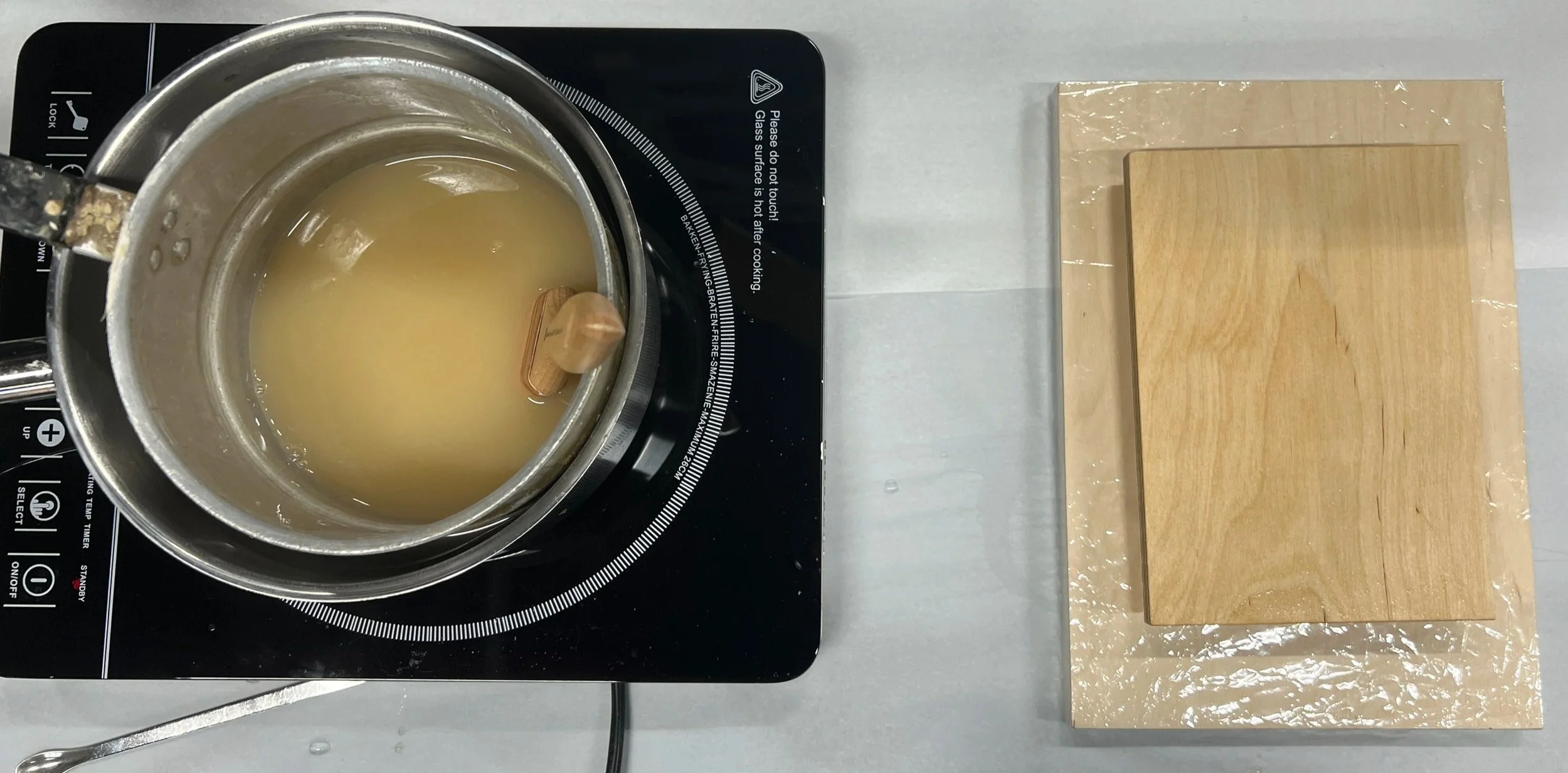
Preparation of Rabbit Skin Glue size layer for wooden panel.
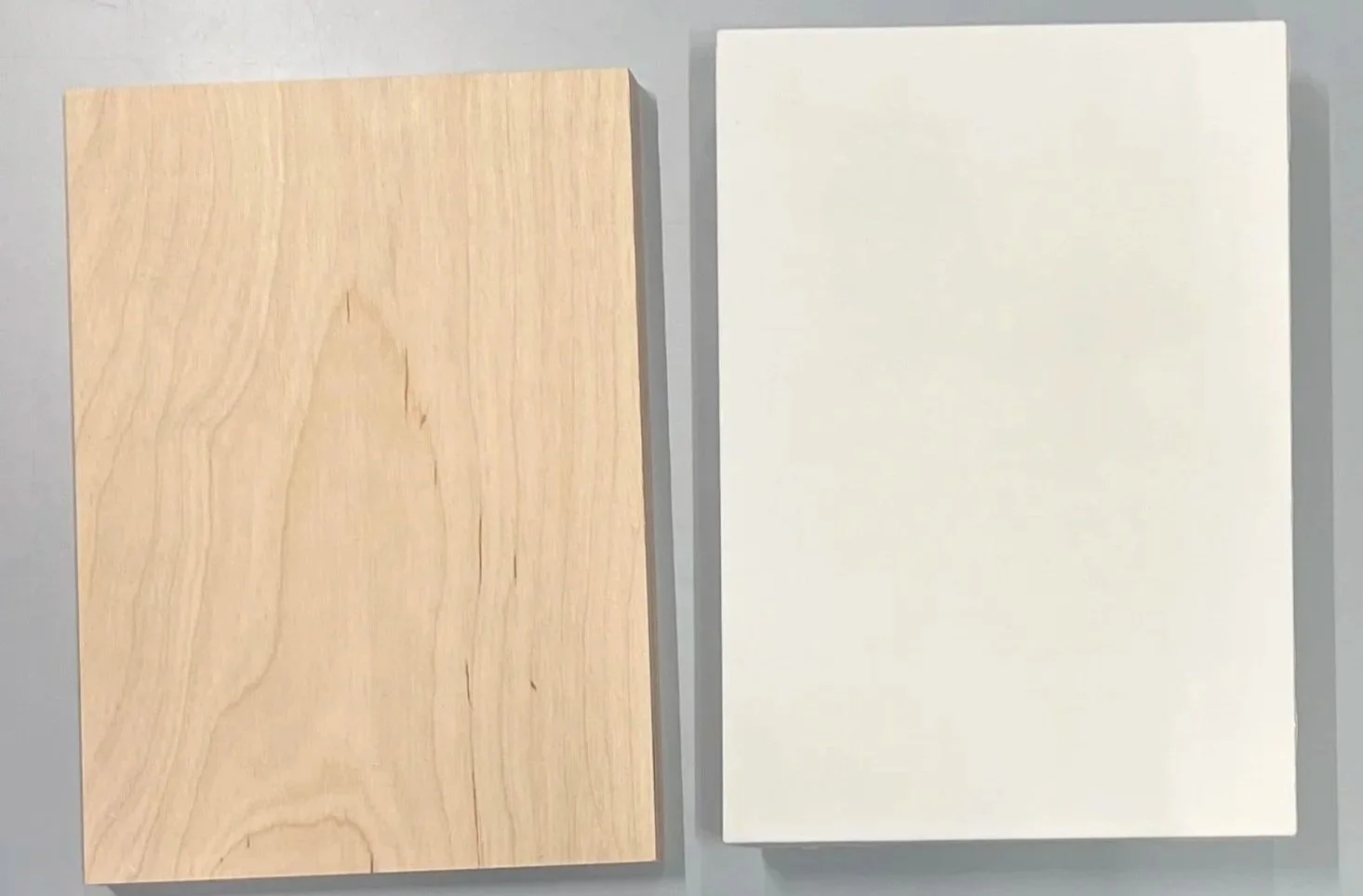
Panel before and after application of size and ground layer.
Tempera Today
In the 21st century, egg tempera occupies a paradoxical position: marginal in the mainstream contemporary art world, but vital within a committed international community of practitioners. The revival of interest in traditional technique, often associated with "atelier" or "classical realism" schools, has brought tempera to wider attention, particularly in the United States. Schools teaching classical painting methods typically include egg tempera alongside oil painting in the Flemish layered technique.
Outside the West, tempera traditions continue unbroken. Japanese nihonga painters use animal-glue (nikawa) binders with mineral pigments on silk and paper. Russian and Eastern European icon painters have seen a significant revival of traditional egg tempera technique following the fall of the Soviet Union. Indian miniature painting, using gum-arabic binders, continues in workshop traditions tracing their lineage to the Mughal courts.
The internet has played a significant role in connecting tempera artists across national boundaries, online communities, dedicated websites, and video tutorials have created new infrastructure for a practice that was once transmitted only through direct workshop training.
For artists willing to master its demands, the meticulous preparation, the discipline of hatching, the refusal to blend, egg tempera offers rewards that no other medium can precisely duplicate. Its pale, cool luminosity; its crisp, almost crystalline precision; its extraordinary longevity. Some of the most beautiful painted surfaces in human history were made with nothing more than ground earth, a glass slab, and a fresh egg.