

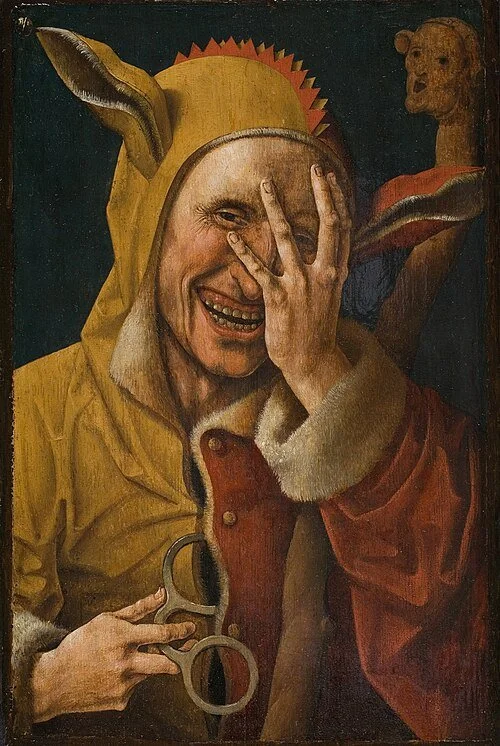
Behind the Painting: Laughing Fool
He is laughing at you. That much is clear.
What is less clear, and what makes this small, strange, centuries-old painting genuinely difficult to shake, is whether the joke is on you specifically, or on all of us, or on no one in particular. Because the fool in this painting is not performing laughter for your entertainment. He is not the court jester caught mid-tumble, the comic figure of a scene you have wandered into. He is looking directly out of the frame, his face split open in a wide, toothy grin, and he is holding up his hand in front of his face in a gesture that art historians link to a Netherlandish proverb about turning a blind eye. He sees you. He has decided something about you already. And whatever he has decided, he finds it very funny.
This is one of my absolute favourite paintings. It is tiny. It is unsigned. We are not even completely certain who made it. And it is, for my money, one of the most psychologically alive faces in all of Northern Renaissance painting.
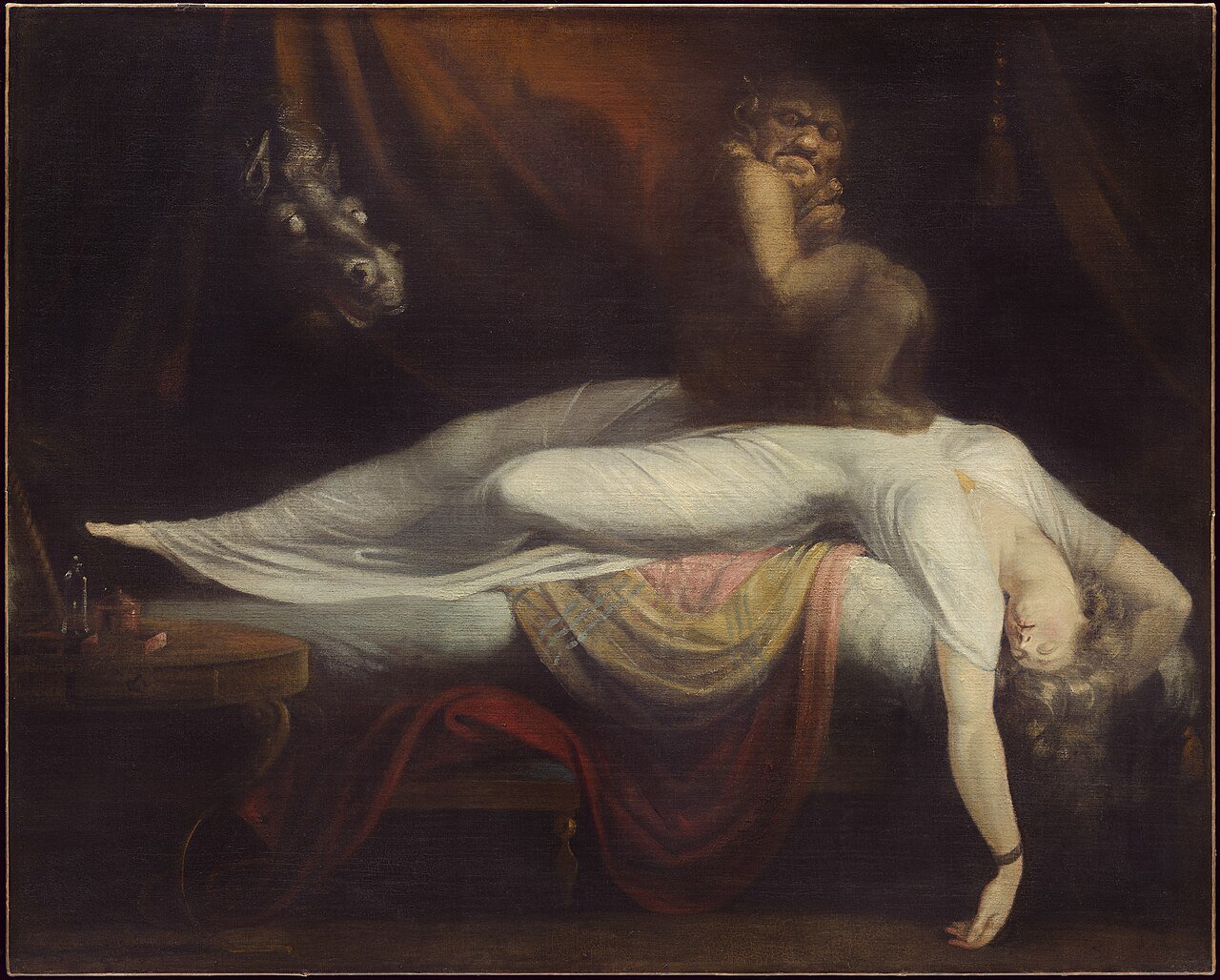
Behind the Painting: The Nightmare by Henry Fuseli (1781)
There is a reason this painting has never left us.
It was made in 1781 and first shown at the Royal Academy in London in 1782, and from the moment it appeared on the wall, people could not look away. They were horrified by it. They were fascinated by it. The exhibition that year drew over 12,000 more visitors than the year before. Within a year, engraved copies were circulating widely. Within a generation, it had seeped into gothic literature, political satire, and the collective imagination of an entire era. More than two centuries later, it is still one of the most recognisable images in the history of Western painting.
I think about why that is, quite a lot. Because on the surface, it should not work as well as it does. The composition is strange. The figures are odd. The atmosphere is overwrought, almost theatrical. And yet it gets under your skin in a way that very few paintings manage. It knows something about fear, about the body, about the particular vulnerability of sleep, that feels true in a way that is hard to explain.
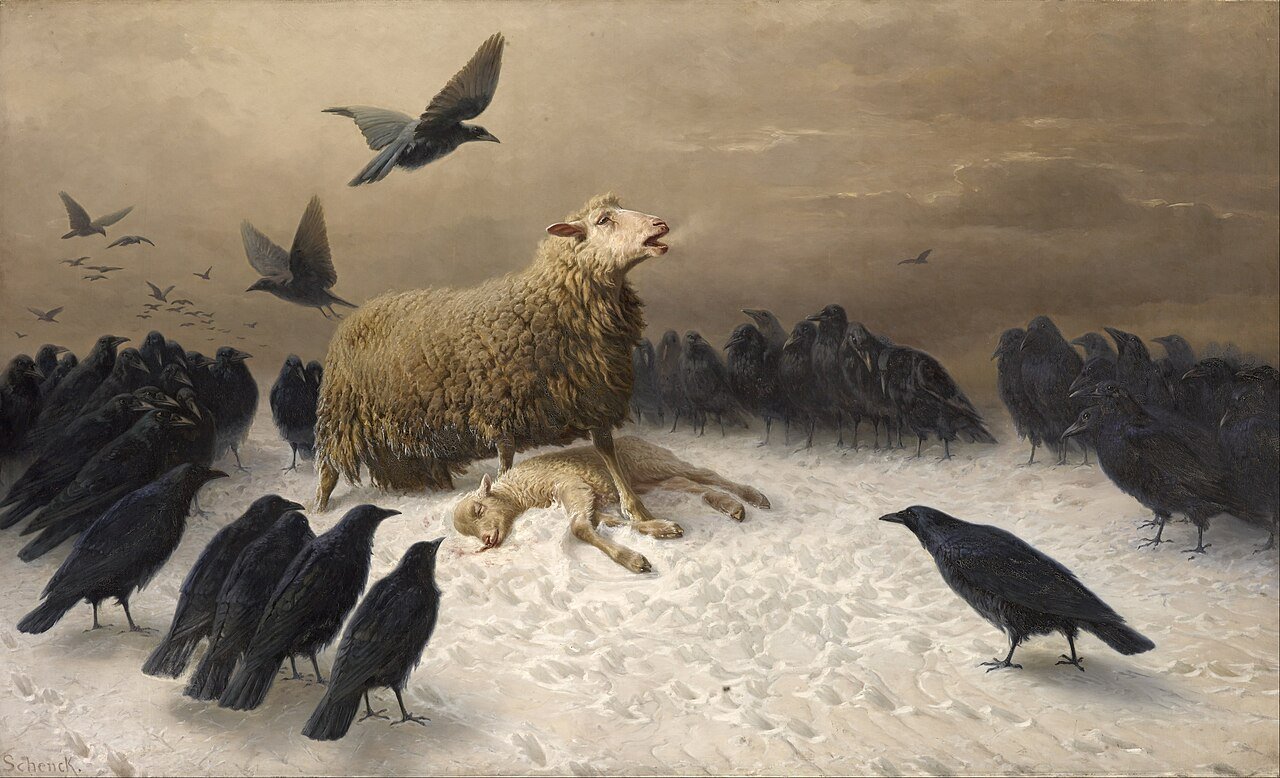
Behind the Painting: Anguish by August Friedrich Schenck (1878)
There are paintings that you look at, and paintings that look back at you. Anguish is the latter.
I've come back to this work more times than I can count — and every time, something tightens in my chest before I've even consciously registered what I'm looking at. That, I think, is the mark of a painting that is doing something genuinely extraordinary. Not through complexity or grandeur, but through the most direct emotional language possible: a mother standing over her dead child, refusing to move.
It's an animal painting. And yet it is one of the most human things I have ever seen.
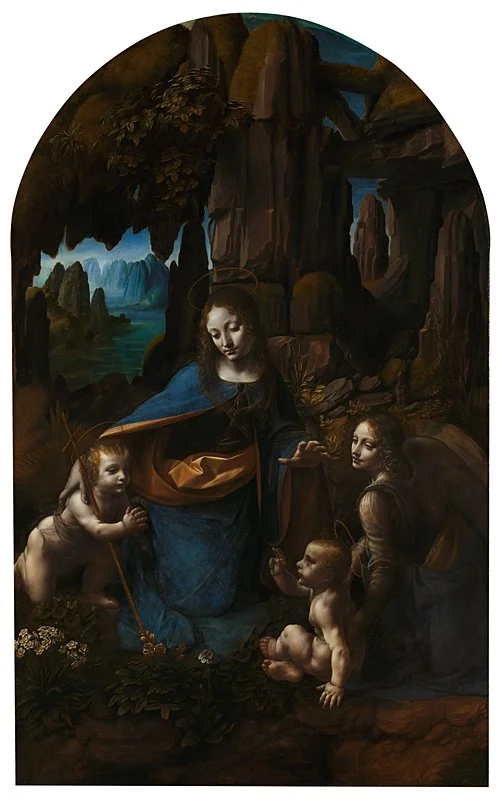
Behind The Painting: The Virgin of the Rocks
Christmas imagery is often dominated by clarity and light. Gold haloes, clean interiors, idealised figures. Yet some of the most compelling images associated with Christ’s birth resist that visual comfort. They place the Nativity not in an ordered, glowing world, but in one that feels uncertain and materially grounded.
Leonardo da Vinci’s The Virgin of the Rocks is not a Nativity scene in the conventional sense. There is no stable, no star, and no sense of public witness. Instead, the painting presents a quiet encounter set within a rocky grotto. It is an image that lends itself to reflection at Christmas precisely because it avoids spectacle.